Artists
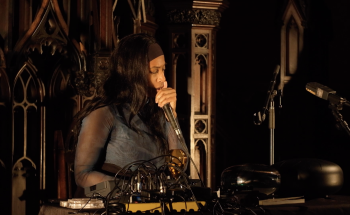
Ned Sublette (1951-) • Starring as “R”
Ned Sublette is a singer-songwriter and author. Trained as a composer and classical guitarist, his albums include Kiss You Down South(forthcoming), Cowboy Rumba (Palm Pictures) and, in collaboration with Lawrence Weiner, Monsters from the Deep and Ships at Sea, Sailors and Shoes (Excellent).
Known for his work integrating musical, cultural, and political history, he has published three books: Cuba and Its Music: From the First Drums to the Mambo (Chicago Review Press; ASCAP Deems Taylor Award winner); The World that Made New Orleans: From Spanish Silver to Congo Square (Lawrence Hill Books; Louisiana Endowment for the Humanities Book of the Year for 2009); and The Year Before the Flood(Lawrence Hill), a memoir of living in Louisiana in two different eras. In collaboration with his wife Constance Sublette, he is currently working on The American Slave Coast, about the slave trade in the making of the US economy.
His best-known song, “Cowboys Are Frequently Secretly,” was released in a version by Willie Nelson in 2006. He appeared as an expert witness in Spike Lee’s 2010 HBO film If God is Willing and Da Creek Don’t Rise. A frequent collaborator with Vidas Perfectas music producer Peter Gordon, Sublette is a longstand- ing member of Gordon’s Love of Life Orchestra. Known for his work with Cuban music, he co-founded and ran the influential label Qbadisc, which beginning in 1992 pioneered the marketing of contemporary Cuban music in the United States, and he produced recordings by Los Muñequitos de Matanzas, Maraca y Otra Visión, and Los Van Van, among others.
Sublette is the founding theorist of postmamboism, which places music at the center of understanding and uses music to interrogate other fields of study. He has produced more than a hundred documentaries about music of Africa and the diaspora for the public radio program Afropop Worldwide, and co-founded that program’s subseries Hip Deep. In 2010-11 he was the Patrick Henry Writing Fellow at the C.V. Starr Center for the Study of the American Experience at Washington College in Chestertown, Maryland, and has also been a Guggenheim Fellow, a Tulane Rockefeller Humanities Fellow, and a Cullman Fellow at the New York Public Library. He is a graduate of the Missouri Auction School.
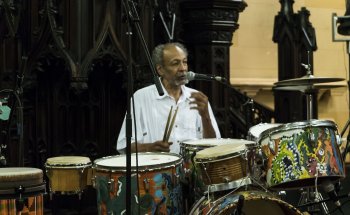
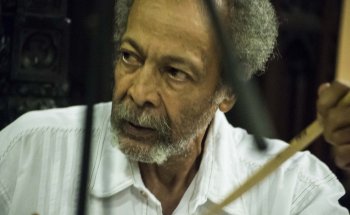
Elio Villafranca (1969-) • as “buddy, the world’s greatest Piano player”
Born in the Pinar del Río province of Western Cuba, pianist and composer Elio Villafranca was classically trained in percussion and composition at the Instituto Superior de Arte in Havana, Cuba. Since his arrival in the U.S. in late 1995, he has been involved in jazz and Latin jazz scenes on both the East and West Coasts. Based in New York City, he is resident professor at Temple University in Philadelphia, PA.
Elio Villafranca is at the forefront of the latest generation of remarkable Cuban pianists, composers and bandleaders that for several years has been making major creative contributions to the international development of modern jazz. In the 2010 Grammy Awards he was nominated in Best Latin Jazz Album of the Year, for his performance, composition and coproduction on the album Things I Wanted To Do by Chembo Corniel.
He has released three albums as a bandleader—each well received. His last album, The Source in Between, 2007, remained in the top 10 of the JazzWeek World Top 50 Chart for eleven weeks, and his first album, Incantations/Encantaciones, was ranked amongst the 50 best jazz albums of the year by JazzTimes magazine in 2003. In 2008 Villafranca was also nominated by The Jazz Corner as pianist of the year and he received the Jazz Twirlie Nomination by Dick Crockett, of “The Voice” at 88.7FM, for his album The Source In Between.
That year, Mr. Villafranca was also honored by BMI with the BMI Jazz Guaranty Award and received the first NFA/Heineken Green Ribbon Master Artist Music Grant for the creation of his Concerto for Mariachi, for Afro-Cuban Percussion and Symphony Orchestra. Villafranca was also pianist in the CD La Guerra No by John Santos Y El Coro Folklorico Kindembo, which was nominated in the 2010 Grammy Awards as Best Traditional World Music Album. Over the years Elio Villafranca’s music has featured jazz master artists such as Pat Martino, Jane Bunnett, Terell Stafford, and Eric Alexander, among other notable instrumentalists.
Villafranca has also performed nationally and internationally as leader of his quartet, and as a sideman he has collaborated with leading jazz and Latin jazz artists including: Wynton Marsalis, Jon Faddis, Sonny Fortune, Giovanni Hidalgo, Eddie Henderson; Miguel Zenón, Cándido Camero and Johnny Pacheco.
Villafranca has toured Europe and has performed at various world-renowned venues and events including the Blue Note Jazz Festival in Ghent, Belgium; at the Blue Note Jazz Club in Milan; the Umbria Jazz Festival in Perugia, Italy; the North Sea Jazz Festival at The Hague, Holland; the Guinness Jazz Festival, and a national tour of Ireland.
Peter Gordon (1951-) • Producer and Sound Designer
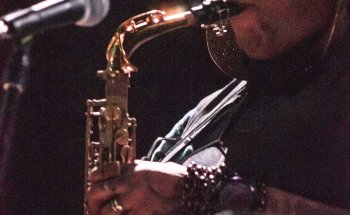
Peter Gordon is a composer, arranger, producer, and saxophonist whose music has been noted for its original blend of lyricism, wit and drama, usually with funky groove. Gordon first gained attention in New York in the late 1970s with his Love of Life Orchestra (LOLO), which synthesized experimental music with dance music and rock, performing at Downtown New York venues such as The Kitchen, CBGB and Mudd Club, as well as concert halls and museums. An early proponent of using the recording studio as a compositional tool, in addition to LOLO recordings, Gordon produced recordings for Jill Kroesen, Laurie Anderson, Rhys Chatham, David Van Tieghem, Arthur Russell and “Blue” Gene Tyranny.
Since the mid-1980’s, Gordon has composed large-scale scores for collaborations in theater, dance, film and video, including Robert Ashley’s Perfect Lives. Gordon’s scores include Bill T. Jones/Arnie Zane’s Secret Pastures (1984); video/music collaborations with Kit Fitzgerald, including Return of the Native (1988); opera and music theater, including The Birth of the Poet (1985), The Strange Life of Ivan Osokin (1994); Bitterroot (2001) and Party Time (1995) with The Talking Band, and Gordon’s collaboration with Lawrence Weiner, The Society Architect Ponders the Golden Gate Bridge (2000), presented by Oper Bonn and Freunde Guter Musik-Berlin. He is the recipient of both an Obie Award and a Bessie Award.
Gordon’s recordings include Star Jaws, Extended Niceties, Geneva, Casino, Innocent and Brooklyn, Leningrad Express, Love of Life Orchestra: Quartet, The Yellow Box (with David Cunningham) and the retrospective anthology Love of Life Orchestrawas released by DFA Records in 2010.
Gordon’s music has appeared films, including Altered to Suit, JoeVersus the Volcano and Deja Vu and television’s Desperate House- wives. Gordon worked with conductor Michael Tilson Thomas and researcher Ronald Robboy restoring original Yiddish scores for the Thomashefsky Project, with performances by the New York Philharmonic, San Francisco Symphony, and New World Symphony.
Born in New York City, Peter Gordon spent his childhood in Virginia, adolescence in Munich and Los Angeles, and attended U.C. San Diego (B.A) and Mills College (M.F.A.), where he studied composition with Kenneth Gaburo and Roger Reynolds, and Robert Ashley and Terry Riley, respectively.
Peter Gordon has received grants from the NEA, NYSCA, DAAD (Berlin Artist Program), and the Japan-US Friendship Committee. Gordon is Associate Professor of Music at Bloomfield College.
Robert Ashley (1930-) • Composer
Robert Ashley, a distinguished figure in American contemporary music, holds an international reputation for his work in new forms of opera and multi-disciplinary projects. His recorded works are acknowledged classics of language in a musical setting. He pioneered opera-for-television. The operatic works of Robert Ashley are distinctly original in style, and distinctly American in their subject matter and in their use of American language. A prolific composer and writer, Ashley’s operas are “so vast in their vision that they are comparable only to Wagner’s Ringcycle or Stockhausen’s seven-evening Licht cycle. In form and content, in musical, vocal, literary and media technique, they are, however, comparable to nothing else.” (The Los Angeles Times).
Born in Ann Arbor, Michigan in 1930, Robert Ashley was educated at the University of Michigan and the Manhattan School of Music. At the University of Michigan, he worked at the Speech Research Laboratories (psycho-acoustics and cultural speech patterns), and was employed as a Research Assistant in Acoustics at the Architectural Research Laboratory.
During the 1960s, Ashley organized the ONCE Festival, the annual festival of contemporary performing arts in Ann Arbor which, from 1961 to 1969, presented most of the decade’s pioneers of the performing arts. He directed the highly influential ONCE Group, a music-theater ensemble that toured the United States from 1964 to 1969. During these years Ashley developed and produced the first of his mixed-media operas, notably That Morning Thing and in Memoriam…Kit Carson, and he composed the sound tracks for films by George Manupelli.
In 1969, Ashley was appointed Director of the Center for Contemporary Music at Mills College (Oakland, California), where he organized the first public-access music and media facility. From 1966 to 1976 he toured throughout the United States and Europe with the Sonic Arts Union, the composers’ collective that included David Behrman, Alvin Lucier and Gordon Mumma. With the support of the Rockefeller and Ford Foundations, Ashley produced and directed, Music with Roots in the Aether: video portraits of composers and their music, a 14-hour television opera/documentary about the work and ideas of seven American composers, which premiered at the Festival d’Automne à Paris in 1976 and has since been shown worldwide in over 100 television broadcasts and closed-circuit installations.
Staged versions of the operas Perfect Lives, Atalanta (Acts of God), and the tetralogy, Now Eleanor’s Idea, have toured throughout Europe, Asia and the United States. Ashley and his company have been presented at the Avignon Festival, the Festival d’Automne à Paris, Musica Strasbourg, the Almeida Festival (London), the Festival de Otono (Madrid), New Music America (New York, Chicago, Minneapolis, San Francisco, Philadelphia), the Inventionen Festival and the Hebbel Theater (Berlin), by the Gaudeamus Foundation (The Netherlands), the USIS Interlink Festival ( Japan), the Next Wave Festival (New York) and Site Santa Fe.
Other commissioned works include operas Now Eleanor’s Idea (1993) and Foreign Experiences (1994) for his own opera ensemble, with funds from the Mary Flagler Cary Charitable Trust and Meet the Composer’s Lila Wallace-Reader’s Digest Commissioning Program; Van Cao’s Meditation (1992), for pianist Lois Svard; Outcome Inevi- table (1991), for chamber ensemble, by Philadelphia’s renowned Relâche Ensemble; Superior Seven (1988), for flute with orchestra and chorus, by Barbara Held and the Bowery Ensemble; eL/ Aficionado (1987), opera, by Mutable Music for Thomas Buckner; Atalanta (Acts of God) (1985), by the Museum of Contemporary Art, Chicago, for its anniversary celebration; Odalisque (1984), for orchestra, solo voice and chorus, by The Arch Ensemble, Musical Elements, Alea III, and The Contemporary Chamber Players of the University of Chicago; Music Word Fire (1981), for television, by Channel 13/WNET.
Ashley has also provided music for the dance companies of Trisha Brown (Son of Gone Fishin’, 1983), Merce Cunningham (Problems in the Flying Saucer, 1988), Douglas Dunn (Ideas from The Church, 1978) and Steve Paxton (The Park and The Backyard, 1978.)
Robert Ashley is the subject of a film by Peter Greenaway, one of a series entitled Four American Composers, published by Transatlantic Films (London) and Mystic Fire Video (New York). Perfect Lives was published by Burning Books (San Francisco) with Archer Fields (New York), October 1991. Ashley’s recorded music and videotapes are available on Lovely Music, Ltd., Nonesuch/Elektra, New World Records, Mainstream, CBS Odyssey, O.O. Discs, Koch International, Unsounds and Einstein Records.
Alex Waterman (1975-) • Director
Alex Waterman is a founding member of the Plus Minus Ensemble, based in Brussels and London, specializing in avant-garde and experimental music. In New York he performs with the Either/Or Ensemble. Alex has worked with musicians such as Robert Ashley, Richard Barrett, Helmut Lachenmann, Keith Rowe, Marina Rosenfeld, Anthony Coleman, Elliot Sharp, Ned Rothenberg, Gerry Hemingway, David Watson, Chris Mann, Alison Knowles, Thomas Meadowcroft, and Michael Finnissy. He has performed as guest musician with numerous ensembles, including Trio Event (Berlin), Champs d’Action-Antwerp, Q-O2-Brussels, and Magpie Music and Dance Company. Waterman has made music for numerous European ballet and modern dance companies including Freiburg Ballett/Pretty Ugly, Scapino Ballet, Nederland Dans Theater III, and others. In 2007 Alex curated two exhibitions in New York, one on experimental music and poetics: Agapê (June 2-July 28th, 2007) at Miguel Abreu Gallery; and the other on graphic notation, Between Thought and Sound: Graphic Notation in Contemporary Music(September 7-October 20, 2007) at The Kitchen in Chelsea. Publications for Between Thought and Sound and Agape are available.
Alex is presently working on his PhD in musicology at NYU as well as writing a book about the composer Robert Ashley with the designer and writer Will Holder. Alex participated in Dexter Sinister’s residency at the Armory for the 2008 Whitney Biennial writing a new work based upon Herman Melville’s Bartleby the Scrivener. Alex Waterman and Beatrice Gibson’s collectively written and scored film, A Necessary Music, narrated by Robert Ashley and with original music by Waterman, premiered at the Whitney Museum ISP show and won the Tiger Prize for Best Short Film at the Rotterdam Film Festival in 2008. Alex lectured and performed as part of the exhibition The Possibility of Action at the Museum of Contemporary Art in Barcelona in 2008, and was in residence at the ICA in May 2009 with his ensemble, in addition to performing solo works. He installed a permanent 12 speaker sound installation out in Napa Valley in July of 2009 at the residence of Norah and Norman Stone, and is presently working on the sound track for a new film project by Cameron Gainer in Vieques, and launching his record label (D.S. al coda). His writings have been published by Dot Dot Dot, Paregon, FoArm, Bomb, and Artforum.
Sarah Crowner (1974-) • Set Designer
Sarah Crowner received her BA from the University of California, Santa Cruz and her MFA from Hunter College in 2002. Recent solo exhibitions include Zig Zags and Curves at Helena Papadopoulos Gallery in Athens, Greece, in 2011 and Acrobat at Nicelle Beauchene Gallery in New York in 2011. Crowner participated in the 2010 Whitney Biennial and international exhibitions including Paying to Visit Mary Part 2, Kunstverein, Amsterdam; Looking Back: The White Columns Annual, New York; and For the Blind Man in the Dark Room Looking for the Black Cat That Isn’t There, Contemporary Art Museum, St. Louis (traveling). Crowner is currently working towards an upcoming solo exhibition in 2011 at Catherine Bastide, Brussels. Crowner also works on various collaborative projects with Dexter Sinister.
Vidas Perfectas is made possible by the National Endowment for the Arts as part of American Masterpieces: Three Centuries of Artistic Genius and by the New York State Council on the Arts with the support of Governor Andrew Cuomo and the New York State Legislature.